
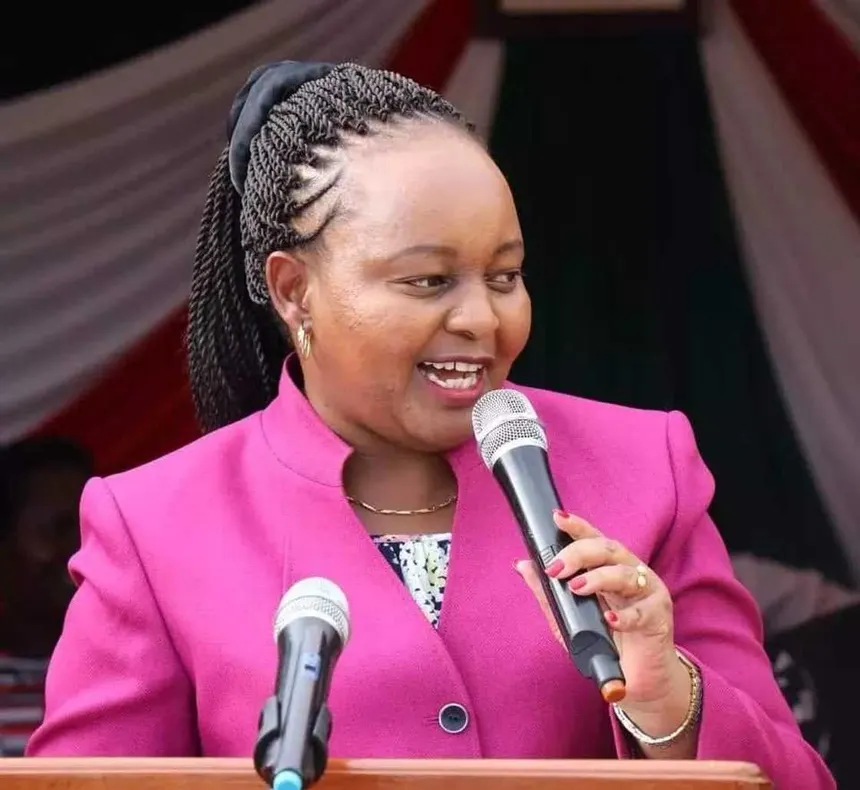
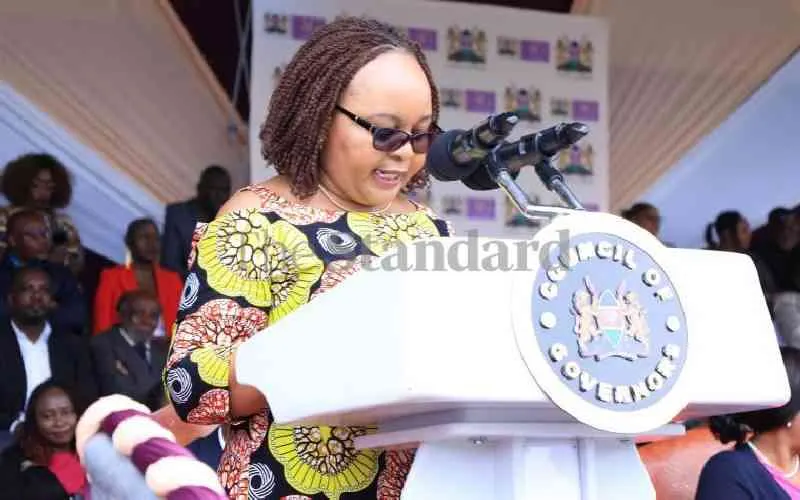
Call her Ann. Ann Mumbi. Ann Mumbi Waiguru. For A is for Anna, M is for Mumbi the Maker or Potter, and W is for Wan from the sky. In some Bantu dialects, Iguru means the sky—child of the stars. Three peels of lilting ululation could have torn the tranquil sky over Ngariama village, Kirinyaga County, Kenya, on the God’s appointed hour in the year of the Lord 1972 of May. But there were no ululations—the birth happened quietly at Pumwani Maternity Hospital in Nairobi, 200 odd kilometers from home.
It was the household of Peter Waiguru and his darling wife Mary that welcomed this rosy neonate—chubby, bouncing, cheeks glowing like rose petals after a drizzle, not yet beaten by the world. She arrived fists clenched, right and left, holding secrets the almanac had not yet revealed.
Struck by cold air, her first wail opened her lungs—and her voice—and began her struggle against gravity. Yet hers was an easy birth. Experts say such children enter a trusting world. And she smiled at the world, and the world smiled back.
The family had repaid the ancestral debt of procreation, fulfilled God’s command: “Multiply and Fill the Earth.” On her mother’s ballooned bosom, the baby lay. The mother wore a one-acre-wide smile, though afterbirth pains seared beneath her skin. If childbirth isn’t the most excruciating moment, then darn if we know pain. Yet if it isn’t the most joyous jiffy, then do we know joy at all?
Back in Ngariama, news spread like bushfire. “What have we got—a herder or a grinder?” they asked. A grinder meant a girl to grind millet; a herder, a boy to defend. But Waiguru’s child? She was a herder—a bouncing girl, a newborn female warrior, complete with all bells on.
Childbirth may be a woman’s affair, but the community rose: grinding millet, fetching water, cooking, washing—treating mother and child like queen and princess. “Kaana gaciarairwa Mukunga,” the Agikuyu say—a child is born for the community.
Ngariama lies in Ngariama Sub Location, Mukure Location, Ngariama Ward of Kirinyaga Central Constituency—one of five wards in that constituency, in Kirinyaga County (No. 19), one of Kenya’s 47. The sub-counties: Kirinyaga Central, East, West, and Mwea.
Kenya is one of 54 African nations. Africa, one of seven continents. The world holds 195 independent countries—South Sudan the youngest, independent since 2011. Our home is Earth—one of eight planets. Pluto? A renegade—like some politicians, born to defect.
When God wills it, children grow great. The stars knew: a leader was born. Waiguru’s daughter would become Governor of Kirinyaga County—president of her people, de facto ruler of every ward and sub-county. None other than Her Excellency Ann Waiguru.
Kirinyaga cradles Mt. Kenya—Batian, Lenana, Nelion—the roof of Kenya, second only to Kili in Africa. Blue hills, green plains, cotton-cloud skies: a land of milk, honey, and contrasts.
In Ngariama, red sunsets blaze in dry season—dust trapping red light while cool hues fade. The sky seems on fire, like the people’s moods during campaigns or rites.
But Waiguru’s daughter was not hot-blooded. She was blue-blooded—born of a great Agikuyu leader. Agikuyu governance is no monarchy, but a traditional democracy, led by Muthamaki and Arathi, under the Kiama gia Athamaki—like the Njuri Ncheke of the Ameru.
A soldier embodies uthaka–muthaka—beauty and bravery. Like a gun. Like a yacht—a vessel of beauty, delivery, and purpose.
Now—who is this Waiguru’s Mumbi girl?